INNOVATION
PFAS Destruction Goes Municipal
Three US cities contracted 374Water's PFAS-destroying supercritical technology in one quarter, signaling real commercial momentum
29 May 2026
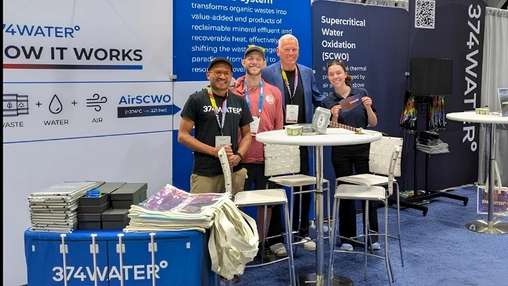
Permanent PFAS destruction is no longer a pilot project. Three US cities contracted 374Water to deploy its AirSCWO supercritical water oxidation technology in a single quarter of 2026, the most concentrated burst of commercial adoption any PFAS destruction platform has seen.
Olathe, Kansas opened the wave with a $2.3 million purchase order confirmed in March. St. Cloud, Minnesota followed in April, using state funding to deploy a mobile AirSCWO unit targeting PFAS-laden biosolids and water treatment residuals through September. A third system is advancing toward installation at the Orange County Sanitation District in California, one of the largest wastewater agencies on the West Coast.
What separates this technology from the field is what it actually eliminates. Granular activated carbon and ion exchange resins, still the dominant treatment approaches globally, concentrate PFAS into spent media that still requires disposal. AirSCWO closes that loop entirely. Exposing contaminated waste to water above its critical temperature and pressure, the system oxidizes all organics to carbon dioxide and water in seconds, leaving no hazardous residual behind. Destruction rates exceed 99.95% across waste streams. That number is the one that matters.
For Australian utilities scaling up under NEMP 3.0, the commercial signal is direct. Spent GAC and ion exchange media from expanded treatment systems represent a growing disposal liability, and regulations governing concentrated PFAS waste are tightening alongside source water standards. Supercritical oxidation offers a verified mineralization pathway rather than a reshuffling of risk.
Both fixed processing hubs and mobile deployable units lower the capital threshold for smaller utilities, a flexibility that aligns with the funding constraints facing many water authorities preparing for compliance investment. SCWO works best on concentrated waste streams, not dilute source water, and 374Water remains in early commercial growth with financial risks clearly flagged. But three contracted municipal deployments in one quarter signals something the sector has been waiting on: proof that PFAS destruction at scale is technically and commercially real.
Related News


SUBSCRIBE FOR UPDATES
By submitting, you agree to receive email communications from the event organizers, including upcoming promotions and discounted tickets, news, and access to related events.